
Sports injury treatment built around chiropractic care offers Scottsdale athletes a genuine path to recovery rather than temporary symptom relief. Whether you are managing a knee strain, shoulder impingement, or chronic pain from months of overtraining, an integrative whole-body approach identifies root causes so you can return to the activities you love with lasting confidence.
Scottsdale's year-round training climate creates specific challenges for athletes. Road cyclists, trail runners, CrossFit competitors, and weekend warriors all place consistent stress on their bodies, often without adequate recovery time between sessions. When sports injuries occur, they rarely develop in a vacuum. A strained ankle shifts how you load your knee. A shoulder injury alters your posture and can place pressure on spinal structures.
Chiropractic sports injury treatment works because it addresses the body as an interconnected system. Rather than focusing only on the injured area, a chiropractor evaluates joint alignment, muscle balance, and nervous system function to understand what contributed to the injury and what full recovery should look like.
The Most Common Sports Injuries That Respond to Chiropractic Care
The most common sports injuries seen in chiropractic and sports medicine clinics include both acute traumas and chronic overuse conditions. Acute injuries involve sudden impact or force, while overuse injuries develop gradually from repetitive movement patterns that stress tissues faster than they can repair.
Conditions that respond well to chiropractic sports injury treatment include:
- knee pain, including runner's knee and patellar tendinopathy
- Shoulder injuries such as rotator cuff strains and impingement syndrome
- IT band syndrome affecting the outer knee and hip
- Lower back strains from running, lifting, or training under fatigue
- Plantar fasciitis, ankle sprains, and other lower-leg injuries
Research by Bronfort et al., published in the Annals of Internal Medicine (2010), documented the effectiveness of spinal manipulation for a range of musculoskeletal conditions, supporting its application in sports injury rehabilitation alongside other therapies.
Chiropractic as Sports Medicine: A Whole-Body Treatment Framework
Sports medicine focuses on diagnosing, treating, and preventing sports-related conditions. When chiropractors bring their training into this space, they contribute an assessment of how spinal alignment and joint mechanics influence the entire kinetic chain from the feet to the shoulders.
At Aligned Integrated Health, sports injury treatment for athletes may include:
- Spinal and extremity adjustments to restore joint motion and reduce nerve pressure
- Soft tissue therapy targeting muscles, tendons, and fascia surrounding the injured area
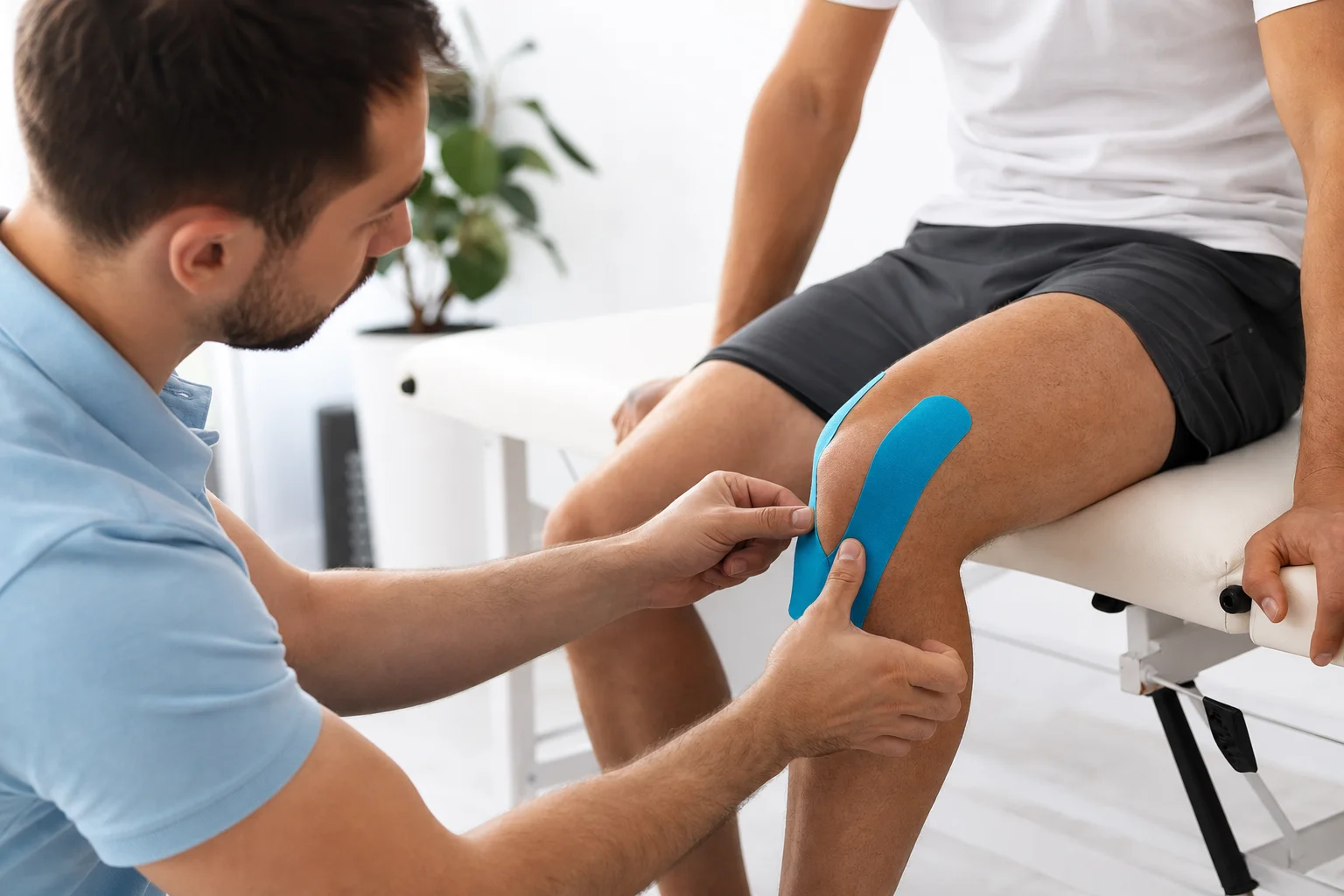
- Taping techniques, including kinesio taping, to support tissues and help reduce swelling during rehabilitation
- Corrective exercises and progressive loading to rebuild strength around affected joints
- Nutritional guidance to support tissue repair and reduce chronic inflammation
Physiotherapists, orthopedic physicians, and other health care professionals frequently collaborate with chiropractors because this integrated approach addresses both immediate pain and the biomechanical factors that drive recurring sports injuries.
Structural Rehabilitation: Training the Body to Prevent Re-Injury
Treating the immediate sports injury is only the first phase of complete recovery. Structural rehabilitation is the process of rebuilding the movement patterns, strength imbalances, and joint stability deficits that made the injury possible in the first place.
For knee injuries, this often involves strengthening the hip abductors, improving quad-to-hamstring strength ratios, and correcting mechanics that create excess joint stress. For shoulder injuries, it means restoring scapular control and rotator cuff coordination before returning to overhead or throwing movements.
Our structural rehabilitation program is built around these principles so athletes are not cycling through the same injury treatment year after year. The goal is a body that performs well and remains resilient under the demands of regular training.
What to Expect During Your Sports Injury Recovery Timeline
One of the most frequent questions athletes bring to their first visit is how long recovery will take. The timeline for any sports injury depends on several factors: the type and severity of the injury, whether it is acute or chronic, how long it went without proper care, and how consistently the rehabilitation plan is followed.
Mild to moderate soft tissue sports injuries often show meaningful improvement within four to eight weeks of consistent care. Chronic pain conditions or more complex injuries may require a longer course of treatment. Throughout the process, your care team tracks objective measures like range of motion, strength output, and pain levels so you always have a clear view of where you stand.
The goal is never just short-term comfort. It is durable, functional health that keeps you active at the level you want for years to come.
Frequently Asked Questions
Can chiropractic care treat a sports injury without surgery?
For most soft tissue injuries, including muscle strains, tendon injuries, and joint sprains, chiropractic care combined with structural rehabilitation can achieve full recovery without surgical intervention. Complete ligament tears, fractures, or injuries with significant structural damage may require orthopedic evaluation first. We coordinate with medical specialists when your injury treatment plan requires it.
Is it safe to continue training while receiving chiropractic sports injury treatment?
Yes. Sports medicine chiropractors adapt care to your active training schedule. Treatment is calibrated to your competition timeline, training load, and the physical demands of your sport. Many athletes use chiropractic care regularly to help reduce the risk of injury during periods of heavy training, not only after an injury has already occurred.
What is taping and how does it support recovery from sports injuries?
Taping involves applying flexible or rigid tape to support soft tissues and joints around the injured area. Kinesio taping is used to reduce swelling, improve proprioception, and allow continued movement during rehabilitation. It is commonly applied to knee, shoulder, and ankle sports injuries and can often be worn during active training sessions.
How does sports medicine chiropractic differ from a standard adjustment?
Sports medicine chiropractic incorporates biomechanical screening, sport-specific movement analysis, and progressive rehabilitation alongside traditional adjustments. The approach extends beyond pain relief to injury treatment prevention and performance optimization, making it especially relevant for athletes who need to stay active during the recovery process.
Do I need a referral to be seen at Aligned Integrated Health?
No referral is needed. You can schedule an appointment directly, and your chiropractor will conduct a comprehensive intake and movement assessment on your first visit to determine the most effective sports injury treatment plan for your body and your goals.
Ready to Start Your Recovery
If a sports injury is limiting your training, affecting your performance, or creating chronic pain that keeps returning, the team at Aligned Integrated Health is ready to help you build a real plan for lasting recovery. Contact us today to take the first step toward getting back to full strength.