
Wondering whether to schedule massage therapy and chiropractic adjustments back to back? Most patients get better results when massage comes first, since warm, loosened tissue lets the spine move freely under a chiropractor's hands. Chiropractic care and massage therapy solve different pieces of the same pain puzzle.
By Aligned Health Team, Integrative Health Specialists
Should You Get a Massage Before or After a Chiropractic Adjustment?
For most patients, massage before the adjustment works best. A short period of focused massage therapy relaxes tight muscles around the spine and pelvis, which reduces the resistance a chiropractor has to work against. When muscle tension is high, the body tends to guard against movement, and that guarding can blunt how well a chiropractic adjustment holds. Getting massage first is not a strict rule for every patient or every condition, though. Someone recovering from a recent injury, dealing with acute inflammation, or managing certain spinal conditions may need a different order, so it is worth asking your provider what sequence fits your specific case rather than assuming one schedule applies to everyone.
Why Do Chiropractors Recommend Massage Before an Adjustment?
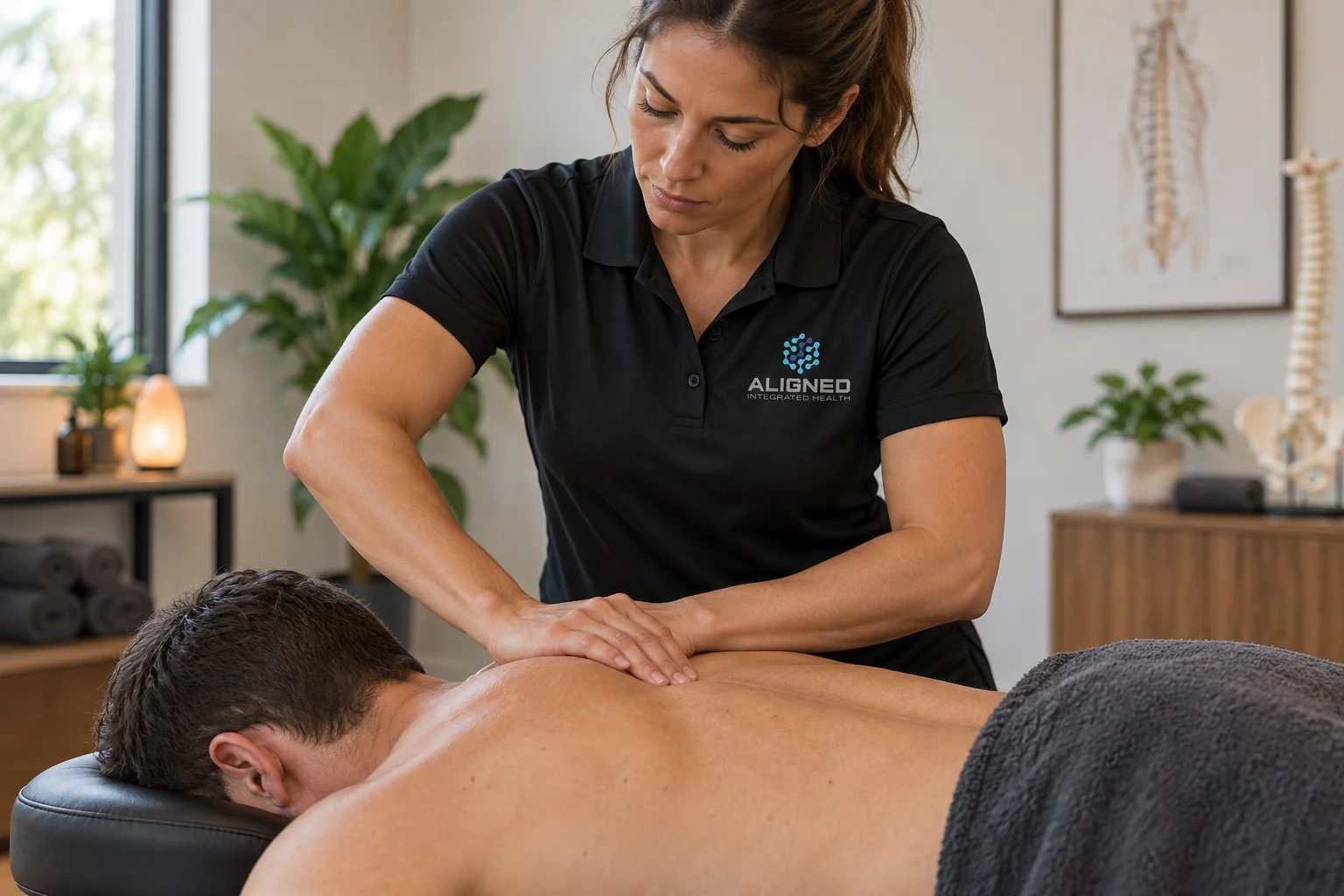
Massage therapy warms soft tissue, increases blood flow, and helps loosen the muscles that surround the spine and major joints. That matters because tight, guarded muscles can limit range of motion and make it harder for a chiropractor to deliver a precise, comfortable adjustment. Many chiropractic care providers view massage as a preparation step rather than a separate service: it softens the tissue so the adjustment itself requires less force and feels less abrupt. Patients with chronic pain from old injuries or long hours at a desk often carry a great deal of muscle tension in the neck and shoulders, and that tension is exactly what licensed massage therapists work to release before spinal work begins. Once that tension eases, the joints underneath usually move with less resistance, which is the whole point of sequencing the two services together.
Can You Get Massage Therapy and Chiropractic Adjustments in the Same Visit?
Yes. Many integrative clinics build both services into one appointment specifically because the two treatments complement each other. A typical combined visit starts with fifteen to twenty minutes of massage, followed by the chiropractic adjustment itself, so the muscles are already relaxed by the time spinal work begins. This is one of the more practical benefits massage therapy offers alongside chiropractic care: patients do not need to schedule two separate trips, and the clinic can time the adjustment to when the body is most receptive to it.
Does Getting a Massage First Make Chiropractic Adjustments More Effective?
For many patients, yes. Loosened, warmer muscle tissue allows the spine and joints to move through a fuller range without the body fighting the motion, which often makes the adjustment more effective and more comfortable. It is not guaranteed for every condition, and a chiropractor may occasionally prefer a stiffer starting point for a specific technique, but for general spinal and postural care, most patients report the combination feels smoother than either service alone. The pairing works because massage addresses the soft tissue that resists movement, while the adjustment addresses the joint restriction underneath it.
What Happens After Your Adjustment: Timing Massage and Rest
Once the appointment itself ends, timing still matters, especially if you are considering a second session the same day.
What Happens If You Get a Massage Right After a Chiropractic Adjustment?
Getting a massage immediately after an adjustment is generally considered safe, but most chiropractic treatment plans favor a short gap instead. Right after an adjustment, the spine and surrounding joints have just been moved into better alignment, and deep pressure applied too soon in the same area can occasionally undo some of that positioning before the muscles and ligaments have a chance to adapt. A light, gentle massage focused away from the freshly adjusted joint is usually fine; deep tissue work on the same segment is better saved for a later session or a different day, once the body has settled into the new position.
How Long Should You Wait Between a Massage and a Chiropractic Adjustment?
There is no single universal number that fits every patient, since it usually depends on the individual's condition, how the body responded to the adjustment, and what the massage is meant to accomplish. Many providers suggest waiting a few hours to a full day before deep, targeted work on the same area the chiropractor just adjusted, while light relaxation massage elsewhere on the body can often happen the same day. The safest approach is to ask your chiropractor or massage therapist directly, since they can see how your particular case responded that day rather than relying on a generic timeline.
If you are not sure how your own pain pattern should be sequenced, our team can walk through a massage-chiropractic combination plan built around your specific condition during a visit; Contact Us to set one up.
Combining Massage Therapy and Chiropractic Care Long Term
Once you know how a single visit should be sequenced, the next question is how often the two services belong together over weeks and months.
Can Massage Therapy Replace the Need for a Chiropractic Adjustment?
No. Massage therapy and chiropractic adjustments address different problems. Massage relaxes soft tissue and reduces muscle tension, but it does not correct joint restrictions or spinal misalignment the way a chiropractic adjustment does. For chronic pain conditions tied to alignment, such as recurring stiffness or nerve irritation, massage alone tends to bring temporary relief that fades once the underlying joint restriction returns. The two services work best as partners rather than substitutes for each other, and most integrative chiropractic care plans use both for exactly that reason.
How Often Should Massage Therapy and Chiropractic Adjustments Be Combined?
This varies by condition and usually gets set during a consultation rather than following one fixed schedule. Someone managing occasional muscle tension might combine the two once or twice a month, while someone recovering from an injury or managing a chronic pain condition may need a more frequent, structured plan for a period of weeks. A chiropractor can reassess the frequency as your body responds and adjust the plan accordingly, which is why an in-person evaluation usually gives a more useful answer than a general rule pulled from an unrelated case.
Frequently Asked Questions
Is it better to get a massage before or after a chiropractic adjustment?
For most patients, massage before the adjustment works better, since it loosens muscle tension and improves range of motion before spinal work begins. Getting a light massage afterward is not harmful, but deep pressure on a freshly adjusted area is usually better saved for a later day. The right order can vary by condition, so ask your provider what sequence fits your specific case.
Can a massage make your muscles too relaxed for an adjustment to hold?
It is uncommon, but very deep, prolonged massage right before an adjustment can occasionally leave muscles so relaxed that a joint does not hold its new position as well. Most chiropractors account for this by timing pressure and duration carefully, or by scheduling deep tissue work on a different day than significant spinal adjustments. A brief, focused massage before an adjustment rarely causes this issue.
Does insurance cover massage therapy and chiropractic care in the same visit?
Coverage depends on your specific plan, and many insurers treat massage therapy and chiropractic care as separate benefits with their own limits, copays, or documentation requirements. Some plans cover massage only when it is medically necessary and billed through the chiropractic treatment plan, while others exclude it entirely. Our front desk can check your specific benefits before your visit so there are no surprises.
How do I know whether I need massage therapy, chiropractic care, or both?
It usually comes down to what is causing your pain. Muscle tension and tightness typically respond well to massage therapy, while joint restriction, misalignment, or nerve-related pain usually needs a chiropractic adjustment. Many patients with chronic pain benefit from both, since one addresses the soft tissue and the other addresses the joint. A brief evaluation can clarify which combination fits your case.
Start Your Massage and Chiropractic Care Plan Today
If chronic pain, muscle tension, or limited range of motion has you weighing massage therapy against chiropractic care, you do not have to choose one; our team can sequence both in a single visit aimed at lasting pain relief. Schedule Appointment to get started.